German Army Soldbuch Grouping Sonderfuhrer Paymaster Josef Weissweiler Infantry Regiment 24 & 407
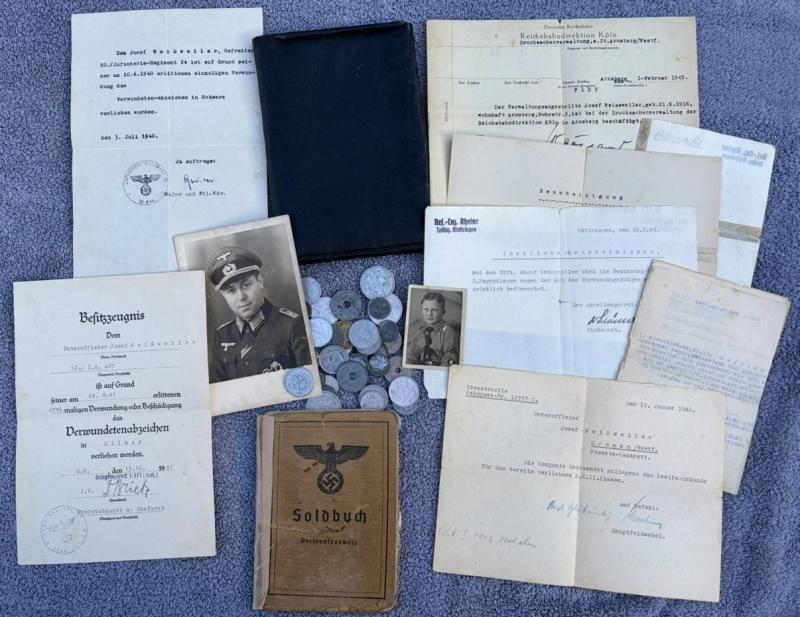
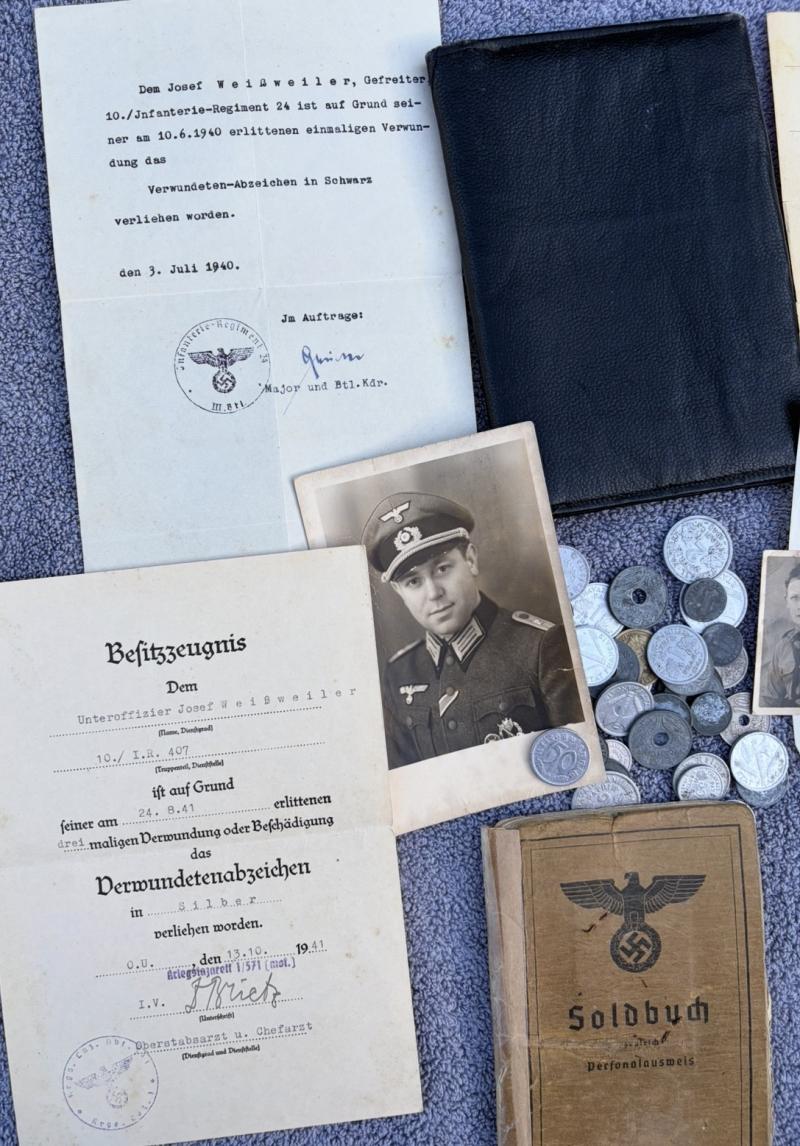
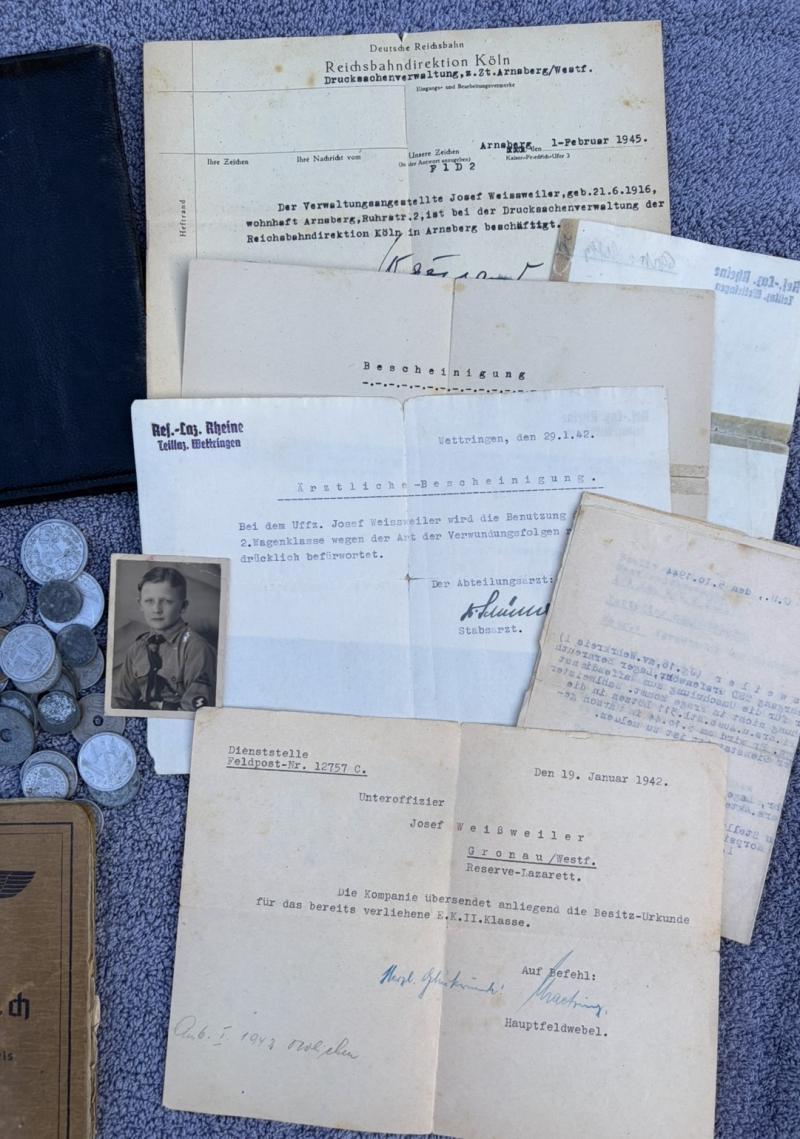
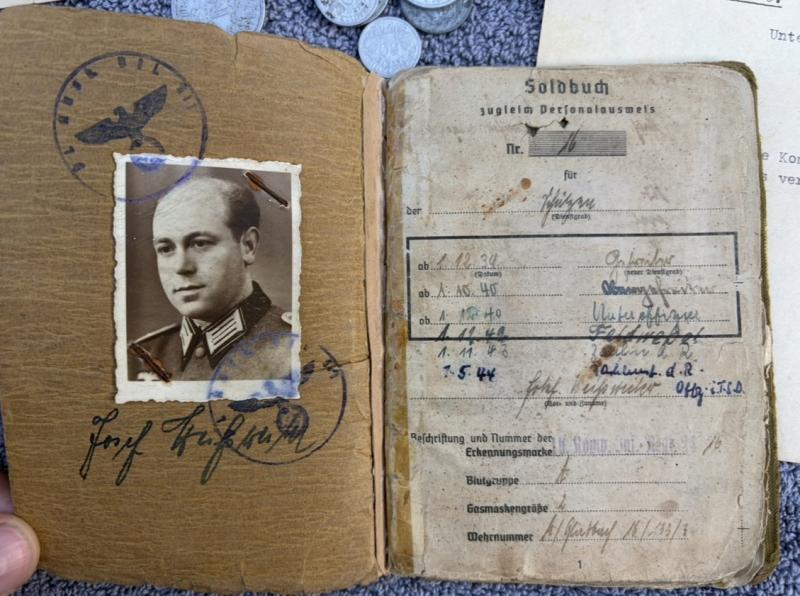
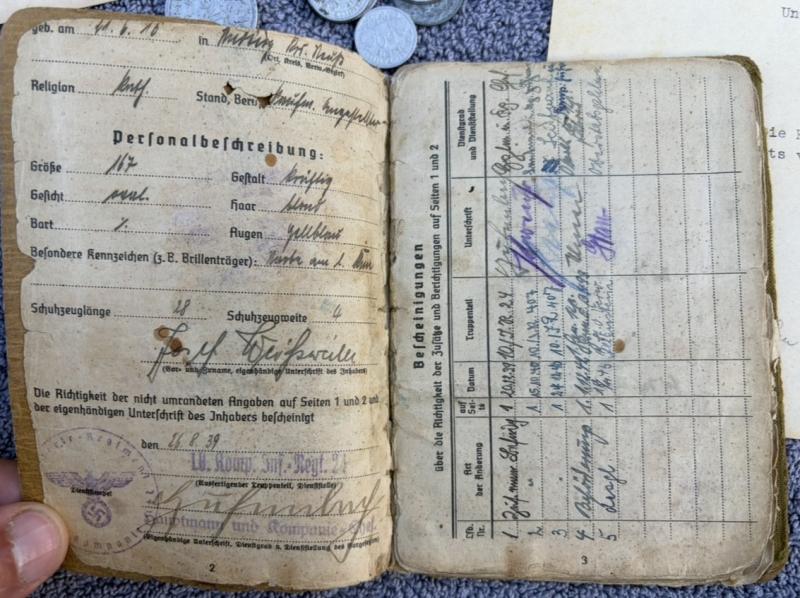
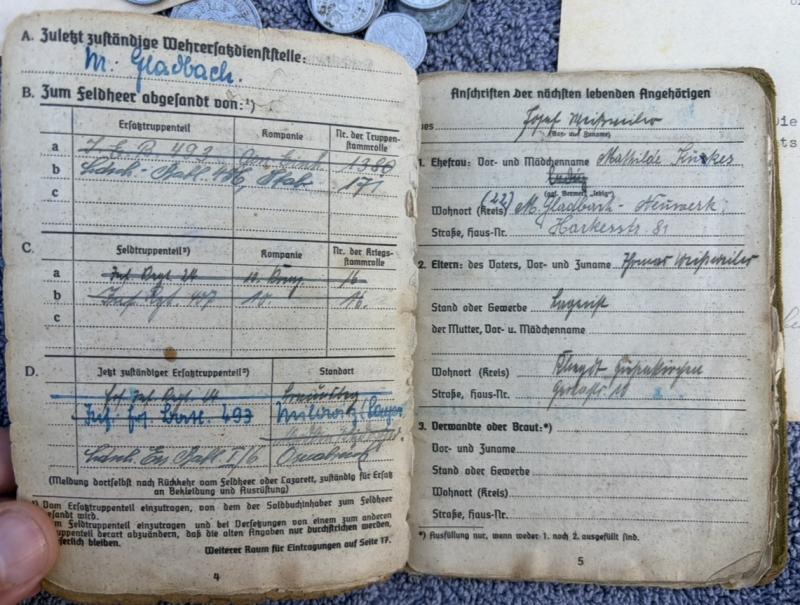
Original Soldbuch grouping to Sonderfuhrer Paymaster Josef Weissweiler.
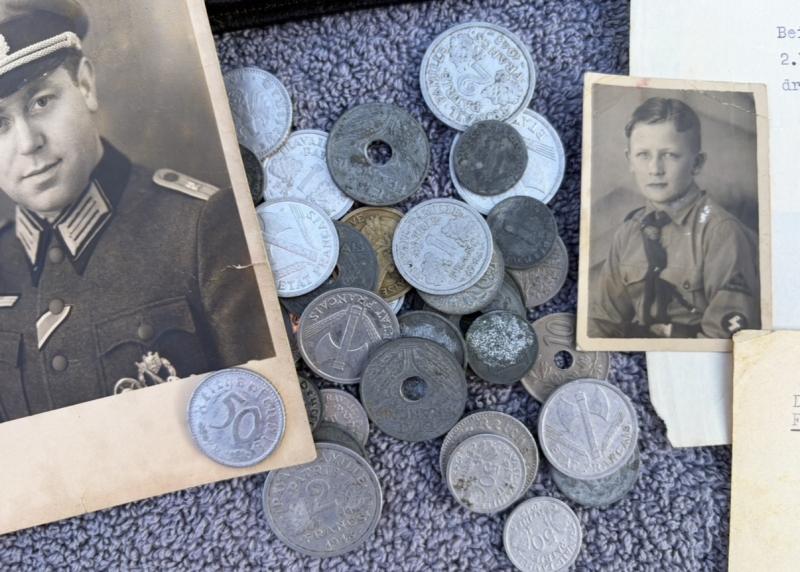
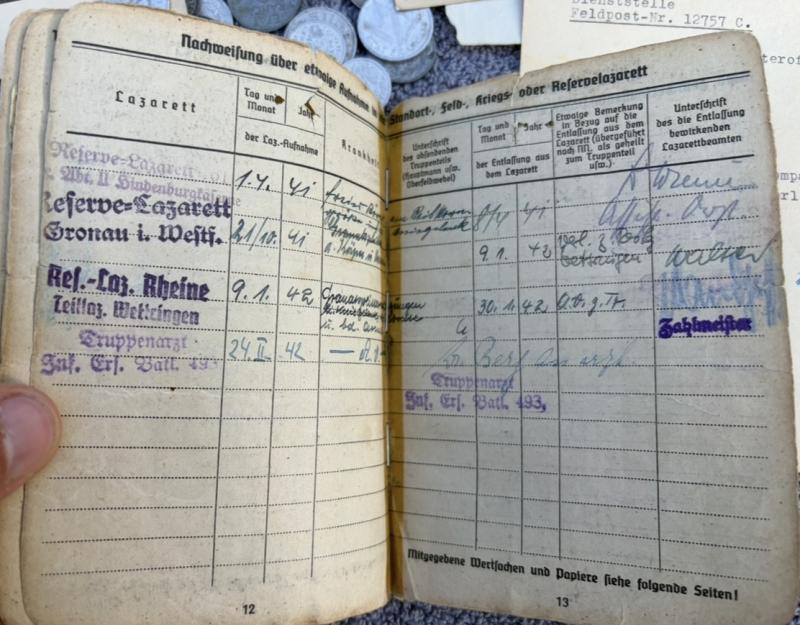
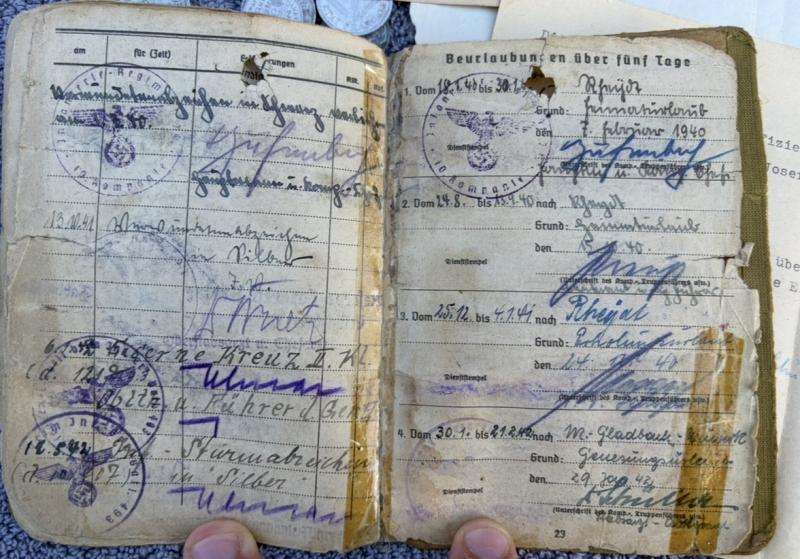
Weissweiler was born 11/06/1910 and started his military career from the non commissioned ranks. During WW2 he originally served with Jager Regiment 24 as part of the 211th Infantry Division who were the 1st Wave during the invasion of Poland and France. From October 1940 he was attached to Jager Regiment 407 who undertook operations subordinate to the 121 Infantry Division during operation Barbarossa. The unit was invoked in the siege of Leningrad. Weissweiler received wounds that granted him the wound badge in black and silver. He was declared unfit for frontline service and trained as an Army Paymaster. Weissweiler then received his commission as an officer and worked as a regimental paymaster. From October 1944 he was assigned to Pioneer Ersatz Battalion 311 where he acted as the second in command. The unit was destroyed in Poland during fierce fighting in January 1945. Due to Weissweiler’s extensive combat experience and the Wehrmacht’s lack of experienced officers, he was given command of Landsschutz Battalion 486 on the Western Front. This unit would surrender at Arnsberg to US forces in April 1945. Included in this group is many documents relating to his recovery at the Feldlazarett. Two field citations are present, for the Iron Cross and Black Wound Badge. His Citation for the Wound Badge in Silver and some other miscellaneous papers including a postcard photograph of him and a small photo of a HJ boy we can only assume is his son. A collection of assorted European and Third Reich coins and his leather wallet. A really nice group the we have extensively researched.
Code: 4390